Best One-Way Window Films: See Out Without Anyone Seeing In in TX
What’s Covered on This Page
- How One-Way Mirror Window Film Actually Works
- Daytime Privacy Film Works, Here Is What Happens After Dark
- Three Types of Privacy Window Film and When Each One Makes Sense
- Does one-way window film work the same way on all sides of my Magnolia home?
- Will one-way window film make my home darker inside during the day?
- Is one-way window film a good fit for Magnolia’s climate year-round?
- What’s a common mistake homeowners make when they first get one-way window film?
- Can I use one-way window film on windows that already have low-E glass coatings?
- How is one-way mirror window film different from regular frosted or privacy window film?
Need Best One-Way Window Films: See Out Without Anyone Seeing In?
Call now for a free estimate
How One-Way Mirror Window Film Actually Works
Here’s what most people get wrong about one-way window film. They think it’s some kind of magic screen that always blocks the view from one side. It’s not. The science behind it is actually pretty simple once you understand one key concept: light difference.
One-way mirror window film uses a thin metallic or ceramic layer bonded to your glass. This layer reflects light on the brighter side while letting light pass through from the darker side. During the day, the sun hits the outside of your window and bounces back toward the street. Meanwhile, your side of the glass stays darker. You can see out clearly, but anyone outside sees their own reflection.
The Light Balance That Makes It Possible
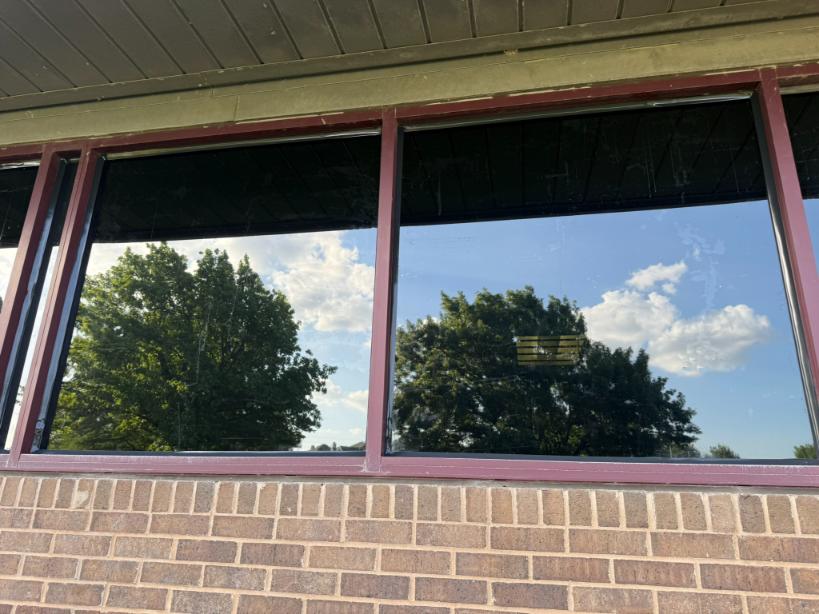
Think of it like standing in a lit room at night looking at a dark window. You see your reflection. Now flip it. Stand outside in the bright Magnolia sun looking at a window with one-way film. You see the sky, the trees, your own face. The person inside sees you just fine.
This effect depends entirely on one condition: the outside needs to be brighter than the inside. That’s why one-way mirror window film works so well during daylight hours in Texas. We get strong, direct sunlight most of the year, the conditions are ideal for this type of privacy window tint.
But at night, the equation reverses.
When you turn on interior lights after dark, your home becomes the bright side. Anyone outside could potentially see in. We tell every customer about this upfront because it catches people off guard. The fix is simple. Use blinds or curtains at night, or pair your one-way film with a secondary frosted window tint layer for rooms where nighttime privacy matters most.
What Happens at the Glass Surface
The film itself is applied directly to the interior surface of your window. A micro-thin metallic coating sits within the film’s layers. When sunlight strikes this coating, a portion reflects outward. The rest passes through as visible light you can enjoy from inside.
Most one-way mirror films also reject a large percentage of UV rays and solar heat. The International Window Film Association notes that quality window films can block up to 99 percent of UV radiation. So you’re not just getting privacy. You’re also protecting furniture, flooring, and your skin from sun damage. For homeowners interested in reducing energy use alongside privacy, the U.S. Department of Energy outlines a range of energy-saving home upgrade options that pair well with window film installations.
We’ve installed one-way film on homes near FM 1488 where the afternoon sun hammers west-facing windows for hours. The homeowners wanted privacy from the road, but they also noticed their AC wasn’t running as hard after installation. That heat rejection is a real bonus most people don’t expect.
Film Types That Create the One-Way Effect
Not every window film gives you this mirror-like look. The ones that do share a few traits:
- A reflective metallic or nano-ceramic layer that bounces light outward
- A visible light transmission rate low enough to maintain the brightness gap
- A neutral or silver tone on the exterior that enhances the mirror effect
- Strong adhesive designed for long-term bonding to residential or commercial glass
Some films lean more reflective. Others offer a subtler look. The right choice depends on your home’s orientation and how much natural light you want inside. And that’s exactly the kind of thing we walk through with homeowners before any install.
If you’re exploring privacy window tint options for your Magnolia home, our window tinting services page covers everything from film types to what works for your specific situation.
The bottom line is straightforward. One-way mirror window film uses physics, not technology. Bright side reflects, dark side sees through. It’s reliable during the day, it needs a backup plan at night, and it does more than just block the view.

Daytime Privacy Film Works, Here Is What Happens After Dark
This is the part most people don’t think about until it’s too late. One-way window films work great during the day. But once the sun goes down, the rules flip completely.
Here’s the simple version. One-way window films rely on a light difference between the two sides of the glass. During the day, the sun is bright outside and your home interior is darker. That light imbalance is what creates the mirror effect on the exterior. People walking by your Magnolia home see their own reflection. You see right through to the yard.
At night, the opposite happens.
Your indoor lights are on. The outside is dark. Now the brighter side is inside your home, so the mirror effect reverses. Anyone outside can see in, and you’ll mostly see your own reflection looking back at you. We get calls about this more than almost anything else. Homeowners install one-way window films expecting round-the-clock privacy, then feel exposed the first evening they turn on a lamp.
Why This Matters for Your Magnolia Home
Texas evenings stay warm for months. Folks in Magnolia spend time outdoors well past sunset. Your neighbors might be grilling next door, kids could be playing in the cul-de-sac. If your living room lights are blazing and your windows face the street, one-way window films alone won’t keep your space private after dark.
That doesn’t mean the film is a bad choice. It means you need a plan for both halves of the day.
What You Can Do About Nighttime Visibility
There are a few practical steps that solve this problem without giving up your daytime privacy:
- Use blinds or curtains at night. Simple, effective. Close them when you turn on interior lights. The one-way window films handle daytime, your window coverings handle the rest.
- Add exterior lighting. Porch lights, landscape lighting, or pathway fixtures increase the light level outside your windows. This helps maintain some of the mirror effect even after sunset. It won’t be as strong as full daylight, but it makes a noticeable difference.
- Dim your interior lights. The less light inside relative to outside, the better the film performs. Smart bulbs or dimmer switches give you control without sitting in the dark.
- Consider frosted window tint for certain rooms. Bathrooms, bedrooms, or any space where you want 24-hour privacy can benefit from frosted window tint instead. It blocks the view from both sides, day and night, while still letting light through.
Most of our Magnolia customers end up combining two of these approaches. A one-way window film on the main living areas paired with frosted window tint on bathrooms works well for a lot of homes near FM 1488 and the downtown area.
And here’s something worth knowing. The nighttime limitation isn’t a flaw in any specific product. It’s physics. Every one-way window film on the market behaves this way. If someone tells you their film works perfectly at night without any additional steps, that’s not accurate. The International Window Film Association confirms this light-dependent behavior applies to all reflective window films.
So should the nighttime factor stop you from choosing one-way window films? Not at all. Daytime is when most privacy concerns actually happen. Mail carriers, delivery drivers, dog walkers, neighbors passing by. Those are daytime situations. At night, a simple set of curtains finishes the job.
If you’re trying to figure out the right combination for your home, our privacy window tint page breaks down the options that work for Magnolia’s climate and housing styles. We’ll help you pick the right film for each room based on when and how you actually use the space.

Three Types of Privacy Window Film and When Each One Makes Sense
Not all privacy window film works the same way. We install three main types here in Magnolia, each one built for a different situation. Picking the wrong one leads to frustration. Picking the right one means you get exactly the result you’re after.
Reflective One-Way Window Film
This is what most people picture when they think about one-way window films. It uses a metallic or metalized layer to create a mirror-like finish on the outside. During the day, anyone looking at your windows sees their own reflection. You see right through from inside.
Reflective film is a strong fit for street-facing windows. Think about homes along FM 1488 or near downtown Magnolia where foot traffic and road traffic pass close to your living room. It handles Texas sun well, too, rejecting a big chunk of solar heat at the same time. But here’s the catch most people don’t realize until it’s too late. At night, when your interior lights are on and it’s dark outside, the effect reverses. People outside can see in. You’ll still want curtains or blinds for nighttime privacy.
Frosted Window Film
Frosted window film blocks the view from both directions. Nobody sees in, nobody sees out. It diffuses light instead of blocking it, so your rooms still feel bright and open.
We recommend frosted film for bathrooms, sidelights next to front doors, office conference rooms, and any window where you never need a clear view. It works 24 hours a day, no exceptions. A lot of Magnolia homeowners use it on ground-floor bathroom windows that face a neighbor’s yard. Simple fix, permanent privacy.
One thing worth knowing: frosted film comes in patterns and textures beyond the sandblasted look. That’s where decorative window tint overlaps. You can get privacy and a design element in one step.
Dual-Reflective Window Film
This is the option most people haven’t heard of. Dual-reflective film has a lighter reflective coating on the interior side and a stronger one on the exterior. The result? Better nighttime visibility from inside compared to standard reflective film, with strong daytime privacy from outside.
It won’t give you full nighttime privacy like frosted film does. But it’s a solid middle ground. You keep clear views during the day, get good heat rejection, and the nighttime mirror effect is less intense than traditional reflective options.
We see this type working well on large picture windows and open-concept living areas where homeowners want to preserve their view of the trees and sky around Magnolia.
Here’s a way to think about which type fits your situation:
- Reflective one-way film: for daytime privacy with clear outward views, ideal for front-facing windows near roads or sidewalks
- Frosted film: for 24/7 privacy where you don’t need to see through the glass at all
- Dual-reflective film: when you want daytime privacy plus reduced interior reflection at night
Most homes in Magnolia end up using more than one type. A reflective film on the front windows, frosted on the bathroom glass, maybe dual-reflective on a big back window facing the patio. That’s normal. And it’s the approach that actually solves the problem room by room instead of forcing one product to do everything.
If you’re not sure which type your windows need, our privacy window tint page walks through the options and makes it easy to request a consultation. We’ll look at your specific windows, your light exposure, and your privacy goals before recommending anything.
Frequently Asked Questions
Common questions about Best One-Way Window Films: See Out Without Anyone Seeing In in TX
Does one-way window film work the same way on all sides of my Magnolia home?
No, the direction your windows face makes a big difference. West-facing windows in Magnolia take the hardest afternoon sun, which actually helps the one-way mirror effect work stronger and longer into the day. North-facing windows get less direct light, so the brightness gap between inside and outside is smaller. That can reduce how well the privacy effect holds. Before you install, think about which rooms and which walls matter most to you.
Will one-way window film make my home darker inside during the day?
Yes, some light reduction is part of how the film works. The reflective layer that bounces light back toward the street also limits how much visible light passes through to your interior. Most homeowners in Magnolia notice a slight dimming, similar to wearing light sunglasses. Rooms with large windows or strong sun exposure usually adjust well. Rooms that already feel dim may feel noticeably darker. Talking through your home’s layout before choosing a film helps you pick the right visible light transmission level.
Is one-way window film a good fit for Magnolia’s climate year-round?
Magnolia’s long, sunny summers are actually ideal conditions for one-way mirror window film. Strong outdoor light is what creates the mirror effect, and Texas sun delivers that most of the year. The added heat rejection is a real bonus here too. Quality window films can block up to 99 percent of UV radiation, according to the International Window Film Association. That matters in a climate where sun exposure is heavy for eight or more months. Winter days with overcast skies may reduce the privacy effect slightly since the light difference shrinks.
What’s a common mistake homeowners make when they first get one-way window film?
The most common mistake is expecting round-the-clock privacy without any backup plan for nighttime. One-way window films depend on the outside being brighter than the inside. Once you turn on interior lights after dark, that balance flips and people outside can see in. This surprises a lot of homeowners. The fix is simple: use blinds or curtains at night, or add exterior lighting to keep the outside brighter. If you want to understand all your privacy options, our window tinting services page walks through what works for different situations.
Can I use one-way window film on windows that already have low-E glass coatings?
This is worth checking before you buy or install anything. Some low-E glass coatings can interfere with how window film bonds to the surface, and adding a reflective film on top of certain coatings can sometimes trap heat in the glass itself. That heat buildup can stress the glass over time. If your Magnolia home was built in the last ten to fifteen years, there’s a good chance your windows already have some type of coating. A professional installer can check your glass type before recommending a compatible film.
How is one-way mirror window film different from regular frosted or privacy window film?
One-way mirror film lets you see out clearly while blocking the view from outside during daylight. Frosted or privacy film blocks the view from both sides at all times. Frosted film is better for bathrooms or spaces where you never need to see out. One-way mirror film is better for living rooms, home offices, or any space where you want the view but not the exposure. The right choice depends on the room and how you use it during the day.